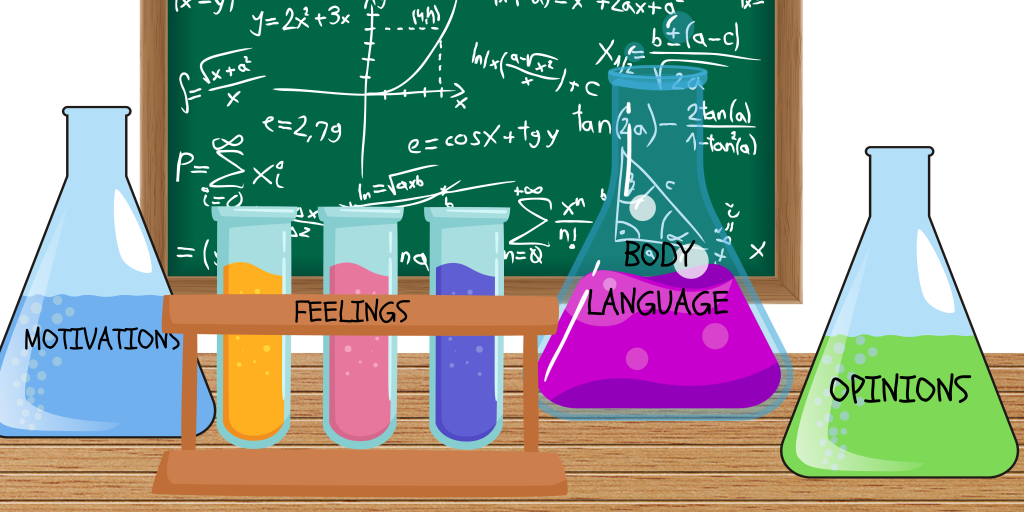
Have you ever watched a character in a movie and wondered why they make certain decisions?
“Don’t split up!”
“Don’t touch that alien!”
“Don’t eat that random, mystery mushroom!”
Realistic character decisions and actions are important because your characters serve as vessels for your reader. They are the guides who lead us through the world you’ve created. Our grounding point. Your reader will come to see themselves through the words and actions of these guides.
Now, unless your character needs to act a certain way for a distinct reason, they should behave in ways that parallel the way your reader would. Would a normal person curse out a stranger for no reason? Would they decide to wander off away from the group while being chased by a serial killer? If they do something that makes the reader ask, “Why did they do that?” and you don’t want them to or you don’t plan on addressing it later in the story, you risk taking your reader out of the story for good.
There are some exceptions, of course. Villains, for instance, act in evil or selfish ways that most of us wouldn’t. That’s what makes them villains; that’s their nature.
Non-human beings can act in ways that we normally wouldn’t because they aren’t human; they can have a completely different way of living life.
Children can act differently from the average adult reader because they aren’t fully mentally developed yet.
So for your average, normal human adult characters, how do you help your reader connect with them? You can do this by asking yourself why questions about the character. How and what questions are used to introduce your character to the reader. They are the basic things that we tend to first notice when we meet a new person in real life. They give us details, but no real insight.


Why questions attempt to understand that character. These questions get us to think more deeply about someone, and we usually come away with a deeper insight to the character when we are able to get an answer.
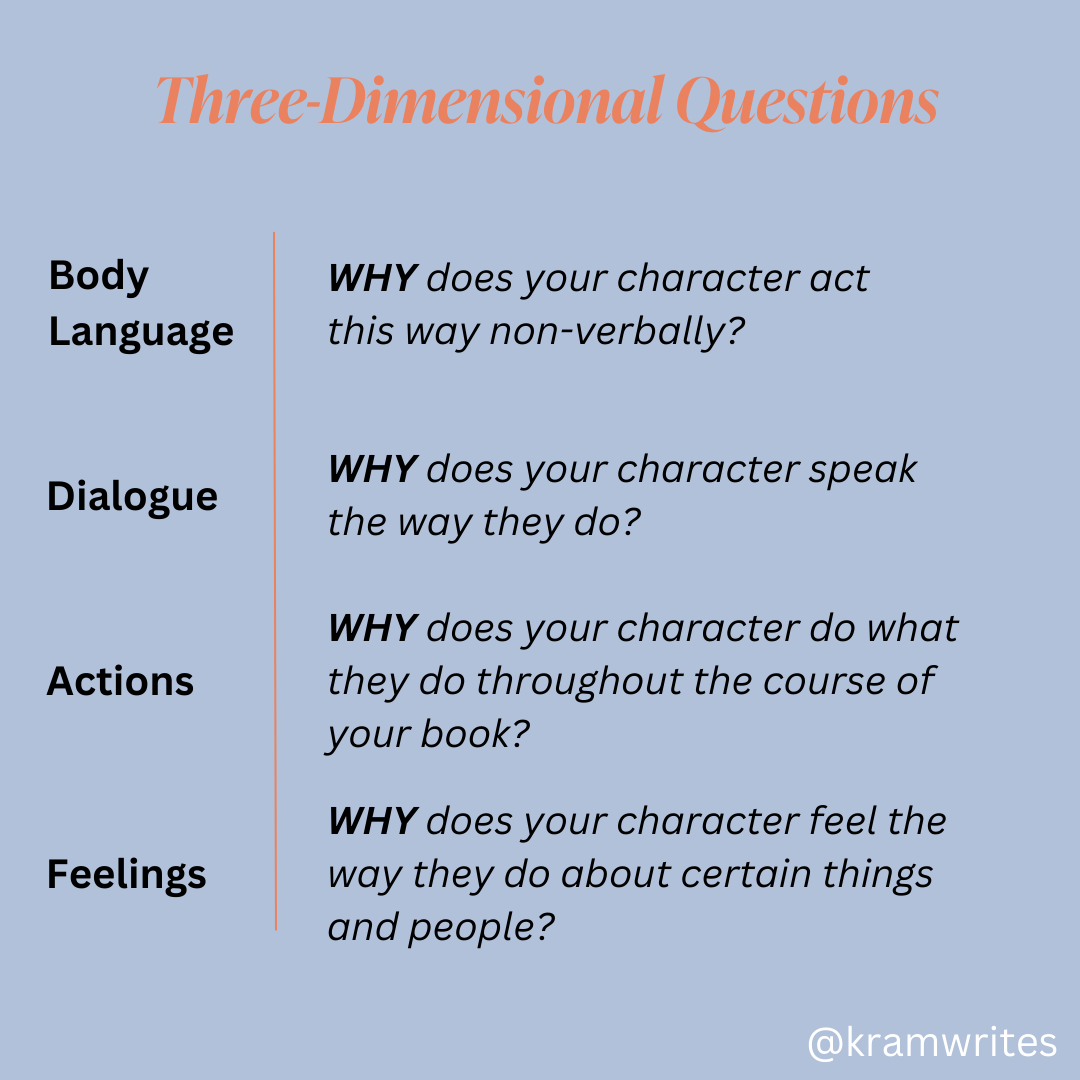
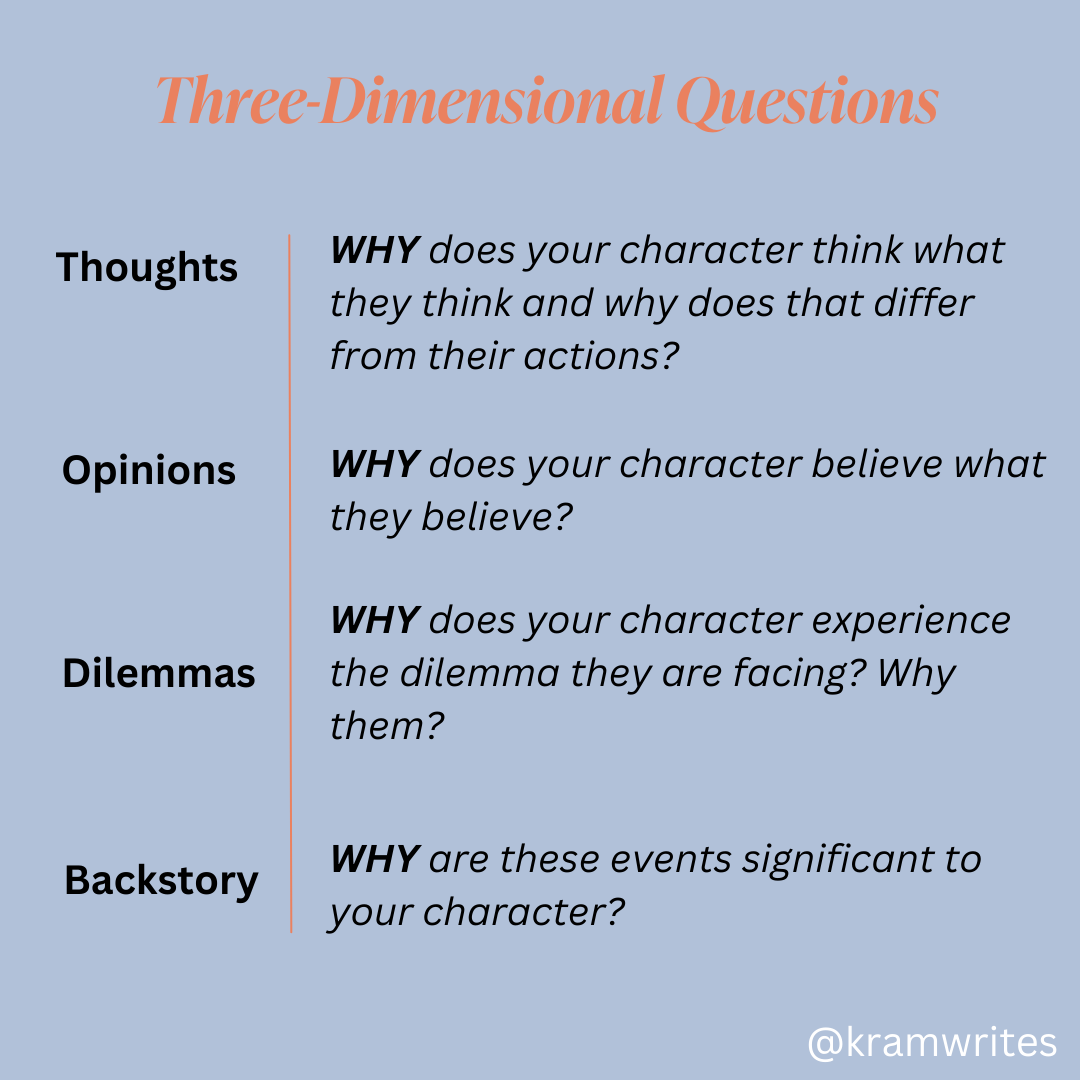
How and what questions combined with why questions give us a full, three-dimensional understanding of a character. We are able to see their unique characteristics, along with motivations and insight. When the reader feels like they fully understand the character, they feel more fully invested in your story and can now focus on the awesome details and plot. So, always ask yourself why before the reader has a chance to.
I hope this helps!
 Writing During an Apocalypse
Leave a comment